Black People Did Worse Economically Under Trump In 2025
Black People Did Worse Economically Under Donald Trump In 2025
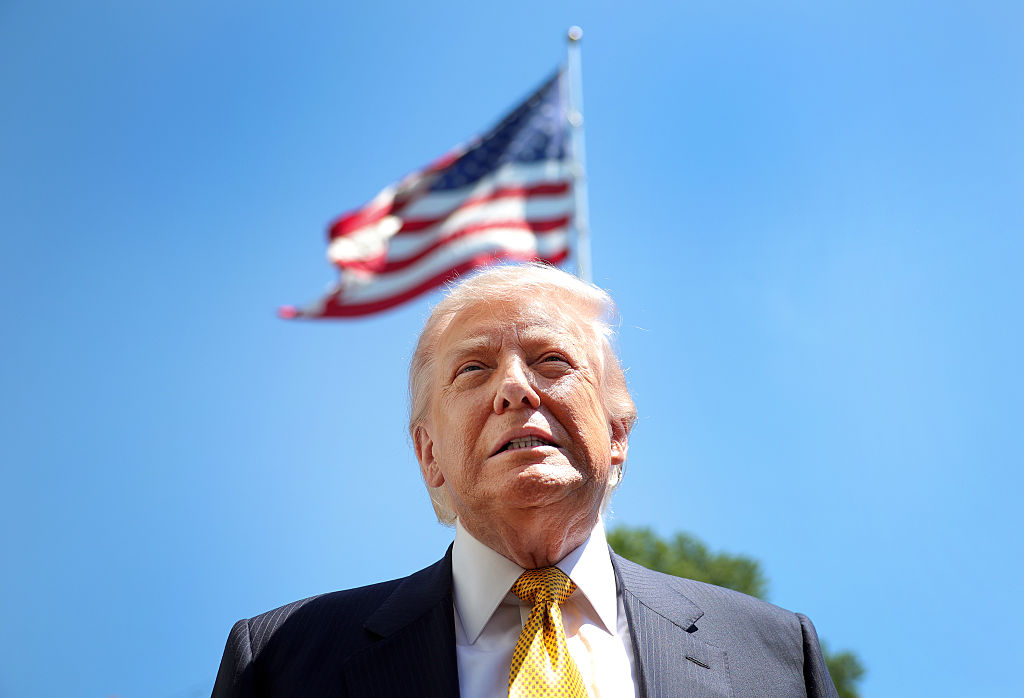
President Donald Trump has, for almost as long as he’s been in office in the last decade, done a shallow, self-serving job of pandering to Black people by pretending he’s been our benefactor, when, actually, he has worked against our collective betterment at every turn. As I’ve written before, “He’s the Miss Millie of presidents and the Milli Vanilli of white saviors.” He claims, “Black people love me,” while implementing policies that erase our history, decrease HBCU funding, disenfranchise us as voters, reverse civil protections for us, make us the face of his anti-DEI propaganda, and relegate us to whatever it is he thinks “Black jobs” are.
So, it should come as no surprise that, at a time when people across the U.S. are feeling the economic burn of Trump’s abject idiocy and incompetence, the Board of Governors of the Federal Reserve System released a survey Wednesday that indicates Black people in the U.S. reported doing worse economically in 2025 than at any time since the Federal Reserve began publishing its Economic Well-Being of U.S. Households report in 2013.
First, it’s worth noting that the Fed seemed to paint a more positive outlook on how people felt about the economy than one would expect, reporting that “73 percent of adults reported either doing okay or living comfortably financially, consistent with 2024 but below the overall high of 78 percent in 2021,” which is still a far more optimistic response than what most non-government polls indicated last year, and even more so than what Trump’s abysmal approval ratings have indicated all through 2026 so far.
At any rate, Black respondents were far less optimistic in what they reported than their white and Asian counterparts, and marginally less optimistic than Latino respondents.
Layla A. Jones did a fine job of breaking it all down over at Talking Points Memo:
The Fed’s economic well-being findings draw on a survey of nearly 13,000 U.S. adults taken in the fourth quarter of 2025. It asks questions about job loss and employment situation, emergency savings, and concerns about price increases, as well as more general survey questions about one’s perceived financial stability. Black people recorded the largest decline in financial stability measures in nearly every category compared to Asian, Hispanic and white respondents.
Black adults were the only racial group who reported a notable jump in concerns about price increases, the Fed wrote in its report, up 6% year over year.
The percentage of Black people “doing okay” or “living comfortably” declined by 5% from 65% in 2024 to 60% in 2025, the largest drop recorded since the Fed began collecting this data, including in 2020 during the COVID-era recession. The percentage of Hispanic respondents “doing okay” or “living comfortably” declined 1% from 63% to 62%, while Asian people’s situations stayed flat with 82% feeling comfortable. White people reported an increase in financial comfort, up from 77% in 2024 to 79% in 2025.
While a larger share of Hispanic people reported doing worse off year over year, Black people netted the largest jump in this category, up 7% to 28% of respondents. White people were the only racial group who felt their economic situations’ improved, with 26% reporting doing worse off year over year, down from 30% in 2024.
The Fed’s survey isn’t the only indicator that Black people are consistently taking a larger share of the brunt of Trump’s mishandling of the economy. According to the Economic Policy Institute, in the first quarter of 2026, “the Black unemployment rate (7.6%) was 1.2 percentage points higher than in the first three months of the second Trump administration,” and “Black men’s employment-population (EPOP) ratio decreased by 1.7 percentage points (from 60.5% to 58.8%) since the first quarter of 2025, with noncollege graduates driving this decline.”
According to the Center on Budget and Policy Priorities, Black households and Black-owned small businesses are also suffering disproportionately, and to an increased degree compared to 2024, due to the significantly weakened labor market, which has caused unemployment among Black households to jump in 2025.
From the CBPP:
In December, the Black unemployment rate was 7.5 percent, the highest since October 2021. Average monthly unemployment for Black workers was 0.9 percentage points higher in 2025 than in 2024, compared to a rise of only 0.3 percentage point in the overall unemployment rate over the same time (see chart). Over the course of 2025, the unemployment rate rose for both Black men and women and across the age span.
Focusing on industries, Black workers tend to be concentrated in sectors like the federal government, manufacturing, and private education and health services. In particular, federal government employment has provided a pathway to the middle class for Black households for decades. Since January 2025, the federal workforce lost 277,000 jobs, according to Bureau of Labor Statistics data, as a result of the Trump Administration’s direct targeting of this workforce with both layoffs and buyouts. Manufacturing employment has fallen by 72,000 since April 2025, when President Trump announced his massive tariff scheme on over 70 countries.
So, whether we’re citing independent research or the federal government’s own data, we can determine that when the raging white nationalist in the White House is at the helm of this nation’s economy, Black people can expect to do worse than everyone else doing bad, which has always been the case, but significantly more so under the president who claims us as his collective “Black friend,” while his policies consistently prove he intentionally moves against us.
SEE ALSO:
Black Unemployment Is Nearly Double The National Average
Black Women’s Unemployment Rate Rising Disproportionately
Poll Finds Nearly Half Of Americans Struggle To Afford Basic Needs
Unemployment Spike for Black Americans Signals Broader Economic Risks
Black People Did Worse Economically Under Donald Trump In 2025 was originally published on newsone.com





